

When I started this course, I viewed writing primarily as an academic requirement rather than a flexible tool. However, over the course of this semester, I realized that writing can be used not only to inform but also to compose strategically for a specific audience. Through my analysis of many different complex social issues, such as Gentrification in Brooklyn, the Digital Rabbit Hole of “Looksmaxing”, and Immigration Myths, I have learned that writing is more than just following a set of guidelines: it is about choosing the right tone and style to create the perfect atmosphere for the reader. In this assessment, I will discuss my progress in four key learning outcomes: Reading and Writing Strategies, Genre, Medium, and Audience; Stance and Argumentation; and Strengthening Source Practices. While I have made significant progress in integrating research and adopting a critical stance, I recognize that I still need to work on making my paragraphs flow more smoothly into each other.
Early in the semester, my writing often separated my personal voice from my research. In the first feedback for my second essay on the “Looksmaxing” community, my professor noted that “the first-person perspective is missing” and encouraged me to include my own experience. So, I decided to apply this strategy in my final draft, describing how I “unintentionally fell into the same pattern” through my TikTok feed. By documenting how my feed changed from basic fitness to “glow-up” transformations, I moved from a distant observer to a primary source of evidence. This Strategy helped me to explain how algorithms “cynically promote anything that keeps users engaged”. Even though I still feel “stuck” on creating seamless transitions between these personal anecdotes and my research, I have learned that a writer’s own experience is a valid and powerful form of evidence.
My third project, a one-minute video guide on immigration myths, was a turning point in my understanding of genre. I realized that “if I were to write a traditional essay filled with statistics, I wouldn’t be able to target a younger audience.” So, I decided to create a short video instead of just writing a long essay, because I identified that high school students “typically do not seek academic or reputable newspapers” for political education. To meet the expectations of this audience, I utilized “cats in business suits,” “memes from TikTok,” and an “AI voice” common in educational social media. My final draft for this project earned an A because I successfully aligned the “form of the content to the target audience,” proving that I can maintain rhetorical effectiveness even when stepping outside the boundaries of a traditional paper.
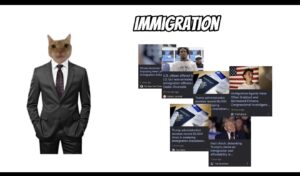
In my first essay on gentrification, I successfully used an interview with my friend Prince to ground my argument in truths regarding “cultural erasure, emotional displacement, and systemic inequality.” However, the initial feedback suggested that my analysis was sometimes “separated from the summary.” I realized I was just telling the reader what happened instead of explaining what it meant. By my second essay, I sharpened my stance, moving from a general description of “Looksmaxing” to a specific argument that it is a “digital culture that has normalized self-hatred.” I learned to use my evidence to argue that “insecurity becomes entertainment” and “harsh judgments are framed as advice.” Formulating these stances required me to look beneath the surface of my observations to find the “guiding idea” my professor initially felt was missing. I further developed this ability in my final project by taking a firm stand against political misinformation. Instead of just listing facts about immigration, I took the stance that “many conversations regarding immigration are influenced by fear rather than research.” By the end of the semester, I stopped being a passive reporter of facts and became an active advocate for my ideas. I now understand that a strong essay needs more than just information; it needs a clear point of view that ties all the evidence together.
In conclusion, this semester has taught me that being a good writer is more than just redacting papers, but rather knowing how to connect with the audience. I have moved from writing formal papers that lacked a personal touch to creating projects that used my own experiences and digital tools to make an impact. My journey from a B on my second essay to an A on my final video project shows that I now understand how to adapt my work for different audiences. Although I still need to practice making my paragraph transitions smoother, I am leaving this class with much more confidence, and now I see writing as a powerful way to challenge misinformation and share important stories in a way that people will actually listen to.

